
Written By Jennifer Phillips Russo, Cornell University Senior Viticulture Extension Associate, Lake Erie Regional Grape Program
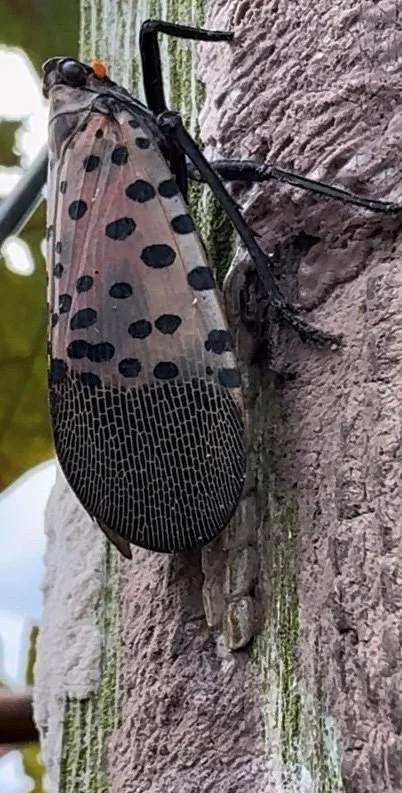
Adult female Spotted Lanternfly laying eggs, seen segmented below the bug, uncovered by the waxy coating, as surrounding egg masses are in different states of covering. Photo taken by Jennifer Phillips Russo of LERGP
Spotted lanternfly is not just a vineyard pest. It is a transportation, harvest, processing, and regional biosecurity concern. For grape growers, haulers, processors, wineries, and vineyard service providers, one of the most important actions we can take is also one of the simplest: inspect before movement.
Every harvest season, grape-industry vehicles and equipment move repeatedly between vineyards, staging/loading areas, processors, wineries, equipment yards, and neighboring farms. Loaded grape trucks leave vineyards for processors. Empty gondolas, bins, trailers, and pallets return to farms. Mechanical harvesters, tractors, forklifts, crew trucks, service vehicles, tarps, straps, and cargo covers move from site to site. Each of these movements can accidentally create a new spotted lanternfly pathway.
The goal of the Look Before You Leave: Spotted Lanternfly Vehicle Inspection for Grape Industry Transportation training is simple: no hitchhikers leave the site.
Why this matters for vineyards and processors
Spotted lanternfly can move with people, vehicles, and equipment. Adults, nymphs, and egg masses may be found on trucks, trailers, grape bins, gondolas, pallets, tarps, forklifts, harvesters, tractors, outdoor materials, and cargo surfaces. During harvest, that risk increases because traffic between vineyards and processors is frequent and fast-paced.
A single missed insect or egg mass can become an accidental infestation pathway. One truck, one gondola, one tarp, one bin stack, or one piece of shared equipment can carry spotted lanternfly from an infested or exposed location into a vineyard, processor, roadside area, equipment yard, or neighboring farm where it was not previously established.
This is why inspection cannot be treated as an afterthought. It must become part of the normal operating procedure for grape movement, just like pre-trip safety checks, harvest logistics, food safety practices, and receiving records.
Processors are especially important partners in this effort. Inspection does not end when grapes arrive. Receiving areas can either become containment points or spread points depending on how incoming loads, unloading areas, empty bins, trailers, forklifts, tarps, and return trips are managed. Incoming loaded units should be visually screened, unloading areas should be watched for escaping adults, and outgoing empty units should be inspected before they leave the processor and return to farms.
Training designed for grape-industry movement
The Look Before You Leave training was developed as a grape-industry implementation tool for growers, haulers, processors, wineries, vineyard service providers, crew leaders, drivers, and seasonal employees. It translates spotted lanternfly quarantine and inspection expectations into the practical movement patterns of grape production and processing.
Participants learn how to recognize spotted lanternfly egg masses, early nymphs, late nymphs, and adults by season. They also learn when inspections should occur, where spotted lanternfly is most likely to hide, what to do when an insect or egg mass is found, and how to document the inspection.
The course emphasizes repeated, documented, practical prevention. The objective is not to make every employee an entomologist. The objective is to give every person involved in vineyard, harvest, hauling, and processing operations a repeatable method they can use before movement.
Support from PDA and NYSDAM
This training is aligned with spotted lanternfly prevention, quarantine, inspection, and reporting priorities supported by the Pennsylvania Department of Agriculture and the New York State Department of Agriculture and Markets. Both agencies recognize the importance of slowing the spread of spotted lanternfly and reducing the risk of human-assisted movement through vehicles, equipment, materials, and regulated articles.
The Pennsylvania Department of Agriculture’s spotted lanternfly program emphasizes quarantine compliance, permitting, inspection, and best management practices to prevent the pest from spreading to new areas. New York State Department of Agriculture and Markets provides spotted lanternfly reporting and response guidance for New York and continues to support efforts that protect agriculture, including the grape and wine industry, from new introductions.
For businesses and organizations operating in or moving from spotted lanternfly quarantine areas, it is important to verify current requirements with the appropriate state regulatory agency. This grape-industry training supports field implementation and employee education, but it does not replace any official state permit course or regulatory requirement where one is required.
The I LOOK inspection method:
The training uses a 5-minute field method called I LOOK:
Inspect. Walk around the vehicle, machinery, trailer, or equipment slowly. Look high, low, front, back, and underneath.
Look Closely. Focus on sheltered, flat, rough, and protected surfaces where spotted lanternfly can hide or lay eggs.
Open and Lift. Open doors, lift tarps, check under straps, and inspect bin corners, forklift pockets, pallet undersides, equipment frames, and protected areas when safe.
Obliterate. Crush live insects. Scrape and destroy egg masses. Do not brush live spotted lanternfly off at a destination.
Keep Records. Record the date, time, vehicle, trailer or cargo ID, inspector, result, and any control action taken. Documents should be kept for two years.
This method can be used on a pickup truck, grape truck, trailer, gondola, bin stack, mechanical harvester, forklift, tractor, sprayer, palletized load, or processor receiving unit or any other machinery. It is simple enough for a 5-minute pre-movement check and structured enough to support training records and inspection documentation.
Where to look before leaving
Drivers, crew leaders, equipment operators, and receiving staff should slow down and inspect the places where spotted lanternfly is most likely to hitchhike.
On trucks and trailers, this includes cab doors, steps, mirrors, windshield areas, grilles, bumpers, wheel wells, tires, mud flaps, undercarriages, hitches, chains, trailer frames, grapes, hydraulic lines, dump boxes, tailgates, tarp rollers, straps, bungees, and cargo covers.
On grape-industry cargo and equipment, this includes gondolas, bins, lugs, totes, pallets, crates, bin bottoms, forklift pockets, pallet undersides, rough wood, wrapped stacks, fruit debris, harvest equipment, conveyors, belts, picking heads, ladders, toolboxes, fuel cans, and equipment frames.
The most important rule is to inspect before movement from a known or possible spotted lanternfly exposure point. That means before leaving a vineyard, before leaving a processor, before moving between farms, and after known contact with spotted lanternfly or swarming activity.
What to do if spotted lanternfly is found
Finding spotted lanternfly is not a failure. Failing to stop, destroy, re-inspect, and document is the problem.
If spotted lanternfly is found:
Stop movement if it is safe to do so. Destroy the insect or egg mass immediately. Re-inspect the entire vehicle, trailer, cargo, bins, gondolas, tarps, and equipment. Document the find, including the life stage, exact location, and control action taken. Notify the supervisor or permit lead. Report sightings when appropriate and follow current PDA, NYSDAM, or other state guidance.
Most importantly, do not brush live spotted lanternfly onto the ground at a processor, vineyard, roadside, equipment yard, or another grower operation. Destroy it.
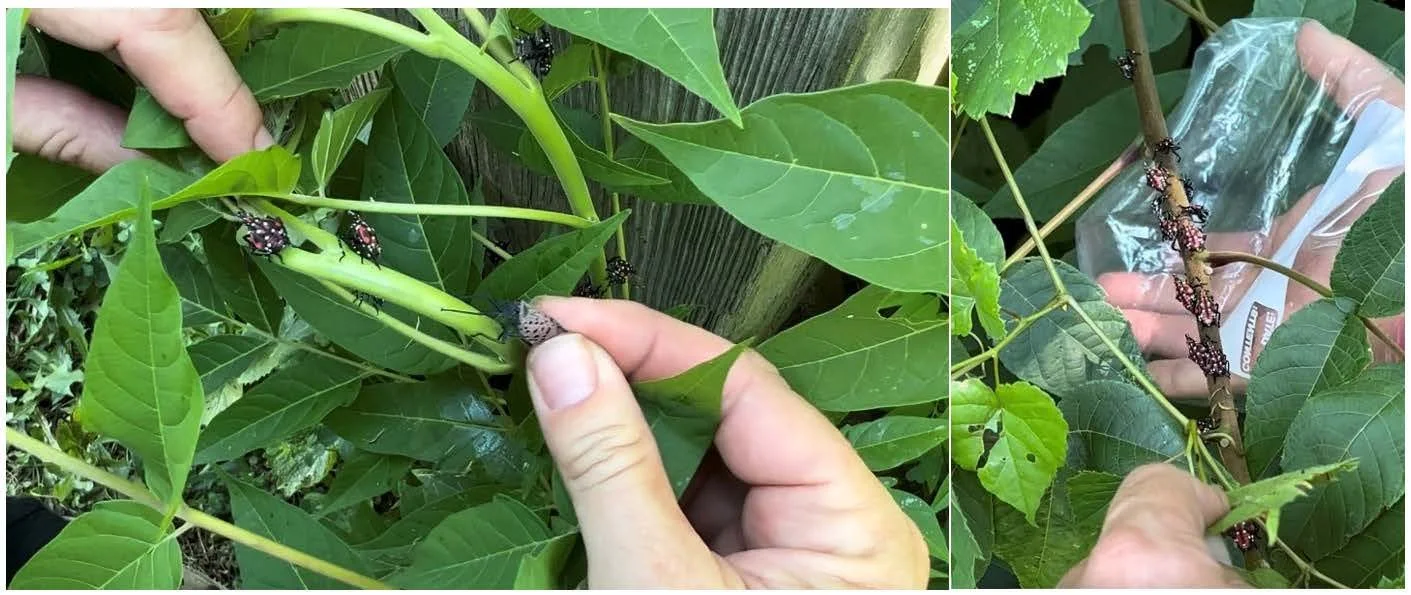
Captured SLF adult and photo of instars and plastic bag to capture and destroy. Photos taken by Jennifer Phillips Russo
Make inspection part of the system
A successful inspection program does not depend on one person remembering to check. It depends on building inspection into the system.
Each farm, hauler, processor, winery, or vineyard service provider should identify a training or permit lead and a backup. Drivers, receiving staff, crew leaders, equipment operators, seasonal employees, and custom operators should be trained. Inspection logs, ID cards, flashlights, scrapers, and disposal supplies should be available where they are needed. Logs should be reviewed during harvest so missed steps can be corrected quickly.
The strongest programs will use the same inspection expectations across farms, haulers, and processors. When everyone on the route uses a consistent method, there are fewer gaps between vineyard departure, processor arrival, unloading, empty return, and movement to the next site.
How Grower Operations Can Use This Training With Their Staff
After completing the Look Before You Leave: Spotted Lanternfly Vehicle Inspection for Grape Industry Transportation training, grower operations, haulers, processors, wineries, and vineyard service providers will have access to a practical staff-training package that can be used directly with employees, drivers, crew leaders, equipment operators, receiving staff, and seasonal workers.
The training materials are designed to be used at the farm or business level. The course handout is a custom packet for grape growers, haulers, processors, wineries, and vineyard service providers, and it is intended to be used with the accompanying PowerPoint deck and SLF Pocket Guide. The materials are written as a grape-industry implementation tool aligned with PDA spotted lanternfly quarantine permit expectations, while also reminding businesses to verify current requirements with the appropriate regulatory agency.
Once a grower, processor, hauler, or designated company representative completes the training, they can bring the information back to their operation and use it to train staff in several practical ways:
1. Full staff training before harvest or high-movement periods.
The full course can be delivered as a 60- to 75-minute staff training that includes spotted lanternfly identification, why inspections matter, vehicle and cargo inspection hotspots, the I LOOK method, incident response, recordkeeping, and a quiz. The course guide also includes a suggested agenda
with time for a hands-on inspection exercise, incident response discussion, recordkeeping, quiz, debrief, and certificate.
2. Tailgate refreshers during harvest.
Operations can also use the condensed 10- to 15-minute tailgate version as a harvest-season refresher. This is especially useful for truck drivers, harvest crews, forklift operators, receiving staff, and seasonal employees who need quick reminders before trucks, trailers, gondolas, bins, tarps, or equipment begin moving between vineyards and processors.
3. Hands-on vehicle and equipment inspection practice.
The training is meant to be practical, not just classroom based. Growers can take employees outside and inspect an actual truck, trailer, gondola, bin stack, harvester, forklift, or service vehicle. Staff should practice using the checklist, identifying high-risk surfaces, and documenting what they inspected. The suggested agenda includes a hands-on inspection exercise using a vehicle, trailer, bin stack, checklist, and mock spotted lanternfly cards.
4. Use of the I LOOK method as a standard operating procedure.
After training, the I LOOK method can become the farm or business’s standard inspection procedure: Inspect, Look Closely, Open and Lift, Obliterate, and Keep Records. Staff are taught to walk around the vehicle or equipment, look closely at protected surfaces, lift tarps and check hidden areas when safe, destroy any spotted lanternfly life stage found, and record the inspection result.
5. Daily inspection logs for drivers and crews.
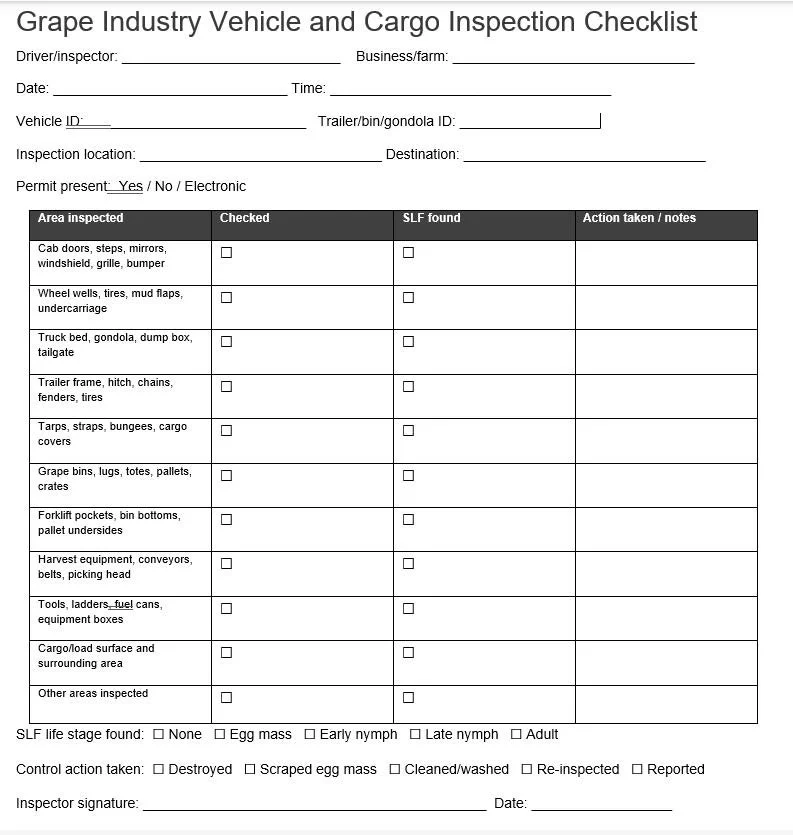
Operations can print and use the included vehicle and cargo inspection checklist as a daily log. The form prompts staff to record the driver or inspector, business or farm, date, time, vehicle ID, trailer or gondola ID, inspection location, destination, permit status, areas inspected, whether spotted lanternfly was found, and what action was taken.
6. Training rosters and quiz records.
Grower operations can document who received the training by using the employee training roster and participant quiz. The handout includes fields for course title, trainer, date, location, participant name, role, company or farm, signature, and whether the quiz was passed.
7. Certificates of completion for trained staff.
After employees complete the training and pass the quiz, operations can issue a certificate of completion. The certificate template documents that the participant received training on spotted lanternfly life stages, grape-industry movement risks, vehicle and cargo inspection procedures, control actions, and recordkeeping expectations aligned with PDA SLF quarantine permit guidance.
8. Bilingual field reminders for crews.
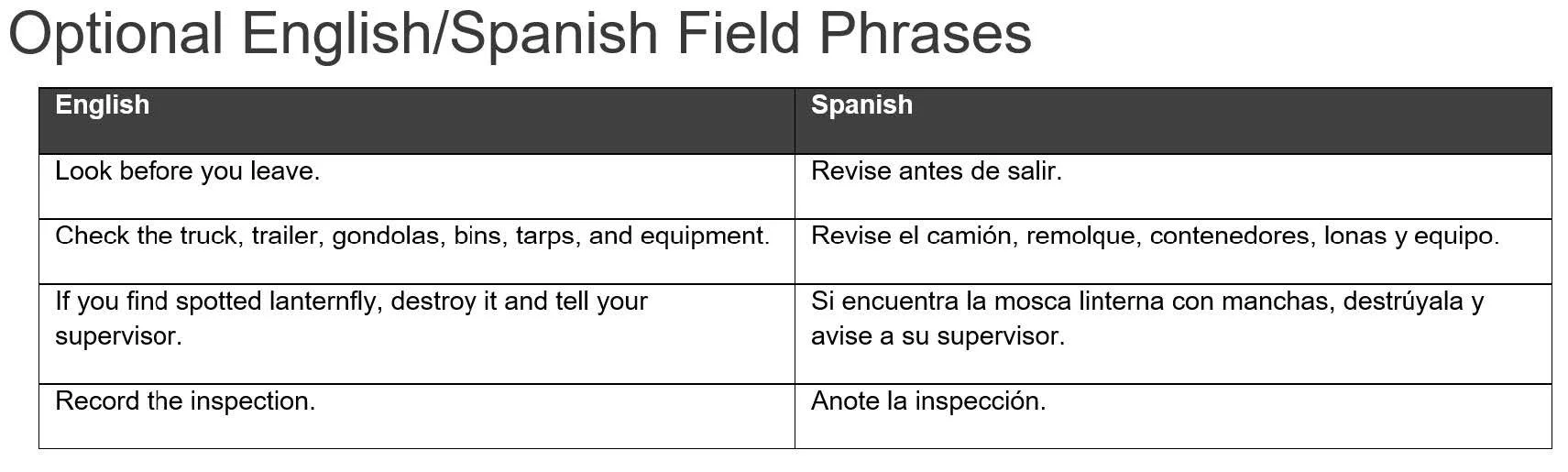
The handout also includes simple English/Spanish field phrases that can be used during tailgate meetings or posted in work areas. These phrases reinforce the core messages: look before you leave, check the truck and equipment, destroy spotted lanternfly if found, tell a supervisor, and record the inspection.
The intention is for trained participants to return to their own businesses with ready-to-use tools: a slide deck, handouts, inspection checklist, incident response card, training roster, quiz, answer key, certificate template, and tailgate script. This allows each operation to create a repeatable internal training program before and during harvest.
For farms and processors, the most important outcome is consistency. Every driver, crew leader, harvester operator, forklift operator, receiving employee, and seasonal worker should know when to inspect, where to look, what to do if spotted lanternfly is found, and how to document the action taken. The training gives operations a way to make that expectation clear, repeatable, and recordable.
The message to staff should be simple: before any truck, trailer, harvester, gondola, bin load, tarp, pallet, forklift, or piece of equipment leaves a vineyard or processor, inspect it. If spotted lanternfly is found, destroy it, re-inspect, notify the supervisor or permit lead, report when appropriate, and document the action taken. The training materials specifically warn employees not to brush live spotted lanternfly onto the ground at a processor, vineyard, roadside, or another grower operation.
By using the training materials inside their own operations, growers and processors can help close one of the most important accidental spread pathways in the grape industry: movement between vineyards, processors, equipment yards, and farms. A trained workforce means fewer missed hitchhikers, better records, and stronger protection for the entire grape-growing region.
A shared responsibility
Spotted lanternfly prevention is a shared responsibility across the grape industry. Growers cannot do it alone. Processors cannot do it alone. Haulers, custom harvesters, wineries, crew leaders, equipment operators, and service providers all play a role.
The route between vineyard and processor is more than a transportation corridor. It is a potential pest pathway. Every inspection helps close that pathway.
Before a vehicle, trailer, gondola, bin load, tarp, pallet, harvester, forklift, or piece of equipment leaves a site, take five minutes to look. Destroy what you find. Re-inspect when needed. Record what was done.
Look before you leave. No hitchhikers leave this site. A clean route protects every vineyard on the route.
“This grape-industry training supports PDA and NYSDAM spotted lanternfly prevention and reporting efforts. Businesses should verify current permit, quarantine, and reporting requirements with the appropriate state agency before moving regulated articles.”