2024 Spotted Lanternfly Summit

A few months ago, the organizers of the 2024 Spotted Lanternfly (SLF) Summit reached out to us to invite us to present our industry’s needs, concerns, and upcoming challenges that we will face when the Spotted Lanternfly reaches our region. This 8th Annual SLF Summit was an event that provides research and regulatory information to those interested in learning more about spotted lanternfly. It was an opportunity to be in front of funding agencies, researchers, and decision makers to introduce them to what a highly mechanized industry will encounter when this agricultural pest invades our vineyard blocks.

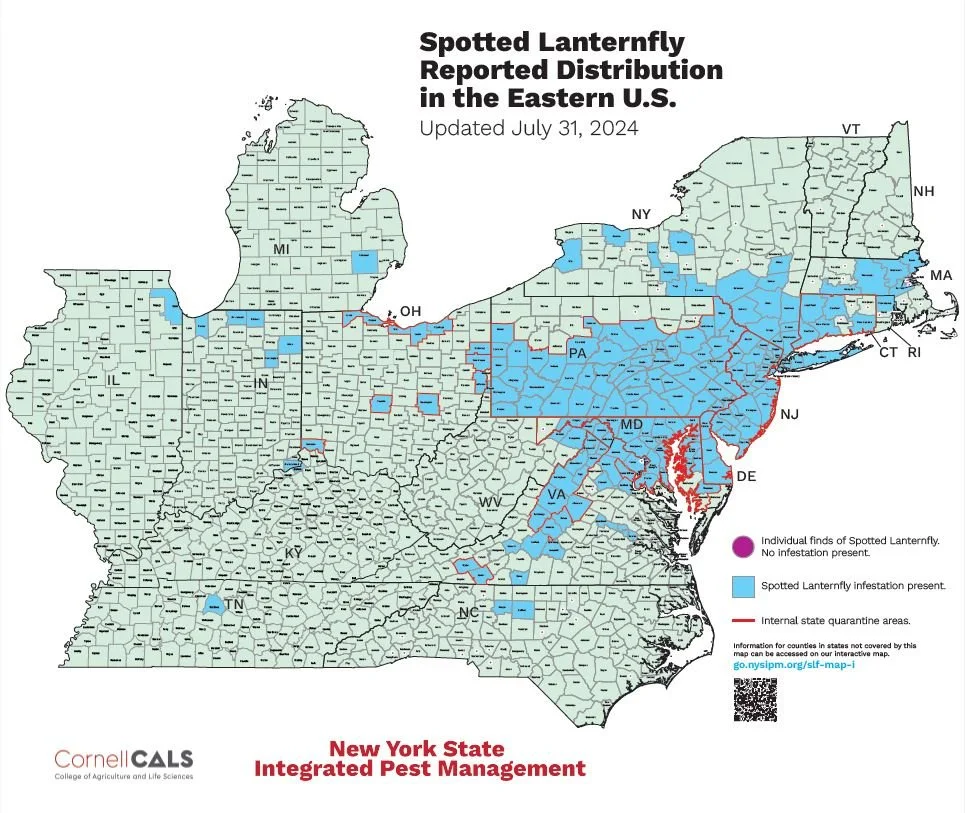
Past research has provided us with invaluable tools on the life cycle, movement, and management in hand-harvested regions, but there is a gap in research in mechanized areas because it simply in not there yet in numbers needed to study. As a region, we want to be prepared and proactive when it comes to managing Spotted Lanternfly in our highly mechanized operations. It was our mission to inform the decision makers of first, maps of the region and infested areas surrounding it, and the potential of interstate and rail that transects our blocks threatening to deposit hitchhiking SLF. Second, we presented numbers on how big our long-established industry is, the efforts we have made to prepare our stakeholders for SLF infestations, the current SLF monitoring efforts, and the potential economic impact to our industry once SLF is here.

Thirdly, we provided video and demonstrated to the audience of over 250 attendees in person and virtual, what a mechanized operation in our area looks like to bring awareness of the potential struggles that we will face especially during bulk harvest when there are no opportunities to physically remove any unwanted SLFs from the harvested fruit. This video also demonstrated the vastness of our vineyard blocks, and we discussed the concerns of marginal profits.

LERGP then provided a long list of grower concerns gleaned from many of our interactions with all of you to the decision makers. The list we presented is below, but additional discussion during the panel section revealed some that were not listed:

  • How many SLF will reject a bulk harvested load

  • SLF Threshold before vine decline

  • Quarantine loads unable to move cross county/state lines

  • How many post harvest sprays are required

  • How many additional sprays can our juice industry absorb economically

  • Mechanical harvesting issues with SLF infestations

  • Toxicity/taint of SLF in product

  • Mating disruptors or Pheromone traps?

  • Impact of derelict vineyards and unmanaged woodlots

  • Impact of rail traffic through infested areas

  • Protections (i.e. insurance?) against economic losses like vine death or rejected loads

  • Potential for disease spread through vectoring

We wanted to not only give the concerns of our growers, but to include the processor stakeholders and how it may affect the end users of the fruits of our labor and grower-owners. Our industry works very closely together to ensure that we remain viable and have always been supportive of our efforts. I put out a call to action for support that was generously answered. This Summit required presenters from our region to drive over five hours and there was a cost to attend. Our industry recognized the importance of getting our needs in front of the funding agencies and decision

makers to bring research to our region and joined us in Harrisburg, PA. We gave a powerful panel discussion that included a representative from the juice industry, the wine industry, and the nursery industry in our region to convey concerns of management strategies, potential delays in operations, and the potential economic impact nationally and globally should those disruptions occur due to SLF.

This was our chance to showcase the rich heritage of our region and importance of needed research to fill the gaps and support highly mechanized areas for sustainability in the wake of Spotted Lanternfly infestations. We presented to esteemed researchers who are experts in SLF, members of many State Agricultural Departments, and to Matt Travis, the United States Department of Agriculture Animal and Plant Health Inspection Service’s, National Policy Manager. Matt is the national Spotted Lanternfly policy maker. He was very engaged in our discussion and thankful to have this brought to our nation’s attention. Matt expressed his concern that the National Agriculture Statistics Service (NASS) only includes data on grapes from the west coast and that there was important data of eastern viticulture that was missing. He personally thanked me for putting numbers to our region so that the nation can have a better understanding of the impact that SLF may have on all grape growing areas. I took the opportunity to give him my contact information and an invitation to reach out for more information or contacts. I also informed him that the New York State Wine and Grape Industry has taken it upon themselves to create their own survey to obtain this important information. This meeting also solidified personal contacts with decision makers from New York State Department of Agriculture and future collaborations. During our presentation and panel discussion, there were many notes taken by attendees and great comments and questions fielded. This was a very important meeting for the future of our Integrated Pest Management, not only on a regional level, but also nationally how this invasive will affect other mechanized regions that will soon be threatened by SLF as well. We were officially thanked in front of the attendees for bringing industry concerns and interactions to the Spotted Lanternfly Summit, a piece that has been missing from the inception of these summits. I am very proud of the exposure, recognition, and support that we received after our presentation and panel discussion, and I am hopeful for future outcomes.


Eastern Viticulture and Enology Forum (EVEF) Webinar Series

The Eastern Viticulture and Enology Forum (EVEF) hosted a webinar: Optimizing Vineyard Spray Programs: Insights from FRAME Networks Project.

Eastern Viticulture and Enology Forum Series (EVEF) is a collaborative effort between the Penn State Extension Grape and Wine Team and several viticulture and enology Extension programs from the following U.S. land grant institutions: Colorado State University, Cornell University, University of Georgia, Iowa State University, University of Maryland, Ohio State University, and Rutgers University. As part of the Eastern Viticulture and Enology Forum Webinar Series, this session was a collaborative effort between these viticulture and enology extension programs coordinated for grape growers and winemakers.

On January 10, 2024 we held a viticulture session - Building Better Spray Programs: practical outcomes from the FRAME networks project, January 24, 2024 was an enology session - An Acid Management Toolkit for Eastern Wines, February 14, 2024 viticulture session – A current review of Spotted Lanternfly updates and findings in vineyards, and February 28, 2024 enology session- Management of Malolactic Fermentation: impact factors. The speakers discussed the biggest takeaways for grape growers across the United States. These events were very well attended.

MyEV Workshop

MyEV training at the Cornell Lake Erie Research and Extension Laboratory in Portland, NY

Dr. Terry Bates and Jennifer Phillips Russo held a MyEV Workshop on February 13, 2024 as a direct result of our advisory committee suggestions. Our growers asked for more opportunities to come in and learn more about the MyEV Tool and how it may benefit them in their operations.

MyEV Tool is a precision agricultural tool that was developed for the grape industry through the 6.2 million dollar Specialty Crop Research Initiative grant the Efficient Vineyard Project. This led to another grant with Dr. Terry Bates through NIFA’s AFRI grant, Cost effective spatial data visualization and decision support for small and medium-sized vineyards. It is our goal to engage producers to use personalized digital agriculture solutions in their own operations. The problem is that most small producers do not have the tools (process) or information (content) or experience (high impact activities) to achieve transformational education in digital agriculture. By integrating research-based digital agriculture education, new spatial processing tools, and producer-led on-farm activities will lead to transformational education in spatial-data driven variable-rate farm management.

We held several one-on-one meetings with growers to get them started this quarter and had 18 attendees at our first two MyEV Workshops in January and February 2024.

Snapshot of the MyEV platform block drawing tool

Tips in Preparation of Herbicide Shortages in 2022 – Tree Fruit and Small Fruit Crops

Thierry E. Besançon, Rutgers University, and Lynn M. Sosnoskie, Cornell University

Many growers in the US have been focused on predicted herbicide shortages in the upcoming field season. While the primary concerns have surrounded glyphosate and glufosinate, there is increasing apprehension that active ingredients of importance to tree fruit and small fruit growers may also be affected. Although the supply change is dynamic, chemical stocks may become, and remain, tight at the local or regional level as growers try to fill gaps in their toolboxes. As spring residual herbicide are soon to be applied, please consider the following when planning for the 2022 season.

Important note: Not all herbicides are available in all crops in both New Jersey and New York.

Always review current labels before applying products.

Successful Weed Identification, Regular Scouting and Detailed Field Records are Crucial for Optimizing Weed Control Success

The first step in developing a novel herbicide program is knowing what species are present and determining which combination of products will be the most effective (and affordable) at suppressing them. Not all active ingredients are equally useful against all species and careful consideration needs to be paid to each chemical’s spectrum of control. Please, carefully review herbicide effectiveness tables for various weed species that are available in the 2022 Commercial New Jersey Pest Control Recommendations for blueberry, tree fruits or grape (https://njaes.rutgers.edu/pubs/). Similar tables are available in Cornell’s weed control guides (PMEP Guidelines (cornell.edu))

Familiarize Yourself with Chemical Substitutes before Applying Them over Many Acres

Some switches may be intuitive (e.g. using Poast (sethoxydim) or Fusilade (fluazifop) in place of clethodim where allowed) while others may be more complicated (e.g. using a tank-mixture in place of a single product). In addition to knowing a product’s target species, become acquainted with each herbicide’s labeled rate structure and spray volume, use patterns (e.g. application timing), environmental limitations (e.g. soil type or temperature restrictions), adjuvant requirements, and potential interactions with tank-mix partners. Not all chemicals are compatible with each other, and antagonism can reduce weed control efficacy while enhancing crop injury concerns. Contact your Extension Specialists if you have any doubt regarding physical compatibility and efficacy of herbicides mixtures.

Soil-Applied Preemergence Herbicides are Critical Tools

Soil-applied preemergence herbicides are very useful tools for suppressing weeds that emerge with the crop; these plants are the most injurious as early season competitors are very likely to reduce yields. Like postemergence products, soil-applied herbicides must be carefully selected to balance crop safety with weed control needs. Pay attention to rate requirements according to soil type, as this can influence both efficacy and injury. Preemergence herbicides need to be moved (aka activation) into the soil solution (via either rainfall or irrigation) where they are taken-up by emerging weed seedlings; delays in activation can reduce overall performance if some weeds continue to germinate and emerge under low soil moisture conditions. Delays may also facilitate the degradation of some products susceptible to breakdown in sunlight (i.e. photolysis). Be aware that trickle irrigation may cause less effective and less

consistent weed control by washing off residual herbicides from top soil where weeds germinate, thus increasing herbicide application costs. When possible, use overlapping residual products to suppress weed emergence throughout the season. Some active ingredients may have both preemergence and postemergence activity (e.g. flumioxazin (Chateau) or simazine (Princep)).

Timing Matters

Postemergence (i.e. foliar) weed control should be undertaken when weeds are small and succulent. Herbicide labels will have specific recommendations regarding the optimal size for treatment. For instance, clethodim (Select Max) and sethoxydim (Poast) have a maximum height or lateral growth requirement of 6 inches for effective control of goosegrass or crabgrass. Weeds are more sensitive to control measures when they are small and succulent, so rapid identification and management will improve control success. Because many foliar-applied herbicides can also damage crops, as well, always follow label guidance to reduce risk of injury.

Optimize Herbicide Application Rate for Postemergence Applications

Target using the lowest effective herbicide rate to stretch your herbicide supply. For example, instead of applying 32 or 44 oz/acre of a glyphosate brand product, consider using the standard rate on the label such as 22 oz/acre for Roundup PowerMax. Again, timing of application with regards to weed size will be critical to optimize your herbicide supply. The smaller the weeds, the less herbicide you will have to apply to control it! Therefore, frequent scouting as highlighted above will be very important to optimize your herbicide application and stretch your herbicide supply.

Don’t Skimp on Adjuvants

If herbicides are going to be in short supply, then there may be fewer shots to control weeds. If there are fewer shots available, make every shot count as much as possible. Follow label recommendations regarding the inclusion of water conditioners, surfactants, etc…, to maximize product efficacy. Refer to point number two about potential compatibility concerns when tank-mix partners are involved.

Get Perennial Weeds under Control

Perennial species such as Canada thistle, goldenrods, bindweed or quackgrass are frequent and troublesome weeds of tree fruit and small fruit crops. Because control of these weeds requires the use of systemic herbicides that may be in short supply (i.e. glyphosate), appropriate timing of application will be critical to maximize herbicide efficacy. For example, Canada thistle should be sprayed with a systemic herbicide in late spring after flower buds started to develop whereas Virginia creeper or poison ivy should be targeted in mid- to late summer after vines flowers but before fall color appears in the foliage. Use effective alternatives such as clopyralid (Stinger) for control of leguminous and composite (e.g. Canada thistle) weeds or soil-applied pronamide (Kerb) for control of perennial grasses where authorized. This may help you to reserve the use of glyphosate for perennial weeds that cannot be efficiently controlled by other products.

Consider Non-Chemical Weed Control Strategies When and Where Appropriate

This includes hand weeding, cultivation, and mowing practices. Like herbicides, these practices are not effective against all species at all times. For example, while cultivation can control many weed seedlings, particularly at the white-thread stage, soil disturbance is less effective against well-developed plants. In the case of some perennials (for instance, field bindweed or Canada thistle), cultivation contributes to break up and disperse root fragments within and across fields, facilitating dispersal. Ultimately, plan for

hand-weeding escapes prior to the weeds setting seeds as this will help reducing the weed seedbank for future growing seasons.

Plan Ahead Now

2022 could be a difficult year if many crop production and protection chemicals are limited. Herbicide shortages could impact weed control success in the coming growing season…and beyond. Weeds that are not controlled in 2022 will set seed that will cause problems in the future. Planning now can help with weed management in both the short and long term.

CCE's Developing Response to COVID-19

NY EDEN, which is the Extension Disaster Education Network, is here for you. If you are looking for up to date information about COVID-19 and other potential disasters, please follow the links below.

The New York State Office of Emergency Management Emergency Operations Center is activated. Using DART and ICS, we continue to work with our Federal and State Agency partners to provide scientific, evidence-based resources for our external stakeholders, audiences, and partners.

Viticulture Extension Specialist hired.

New Viticulture Extension Specialist!

The Lake Erie Regional Grape Program is very pleased to announce that Jennifer Russo has joined their team as the new viticulture extension specialist! The viticulture extension specialist at LERGP plays a key role providing growers in the Lake Erie Grape Belt with the latest research-based information to assist them in producing grapes in an environmentally and economically sustainable manner.  The Lake Erie Grape Belt extends all the way from Erie county Pennsylvania through Chautauqua, Cattaraugus, Erie and Niagara counties of New York.  The viticulture extension specialist is part of an extension team consisting of Tim Weigle, Grape and Hops IPM specialist, Kevin Martin business management specialist, and Andy Muza extension educator.


Jenn_headshot 1.jpg

Jennifer Russo actually joined the Cornell Lake Erie Research and Extension in 2018 as a research technician with the Efficient Vineyard project where she was focused on improving crop estimation procedures and practices from vineyard through industry.  This improvement would have a ripple effect from helping a grower to better understand the amount of grapes in his/her vineyard(s) and the management decisions that flow from there, to trucking, processing, tank space, projections of revenues, and even crop insurance claims. In order to help solve this problem, the development of an accurate automated berry counting machine was deemed necessary.  Jennifer was integral in designing the Cornell Grape Counter (CGC) machine designed specifically to count grapes at the various stages in their development. Working with National Grape Cooperative she was able to fine tune the process over the 2018 growing season. This machine is able to count the berries in 50 clusters of grapes (3,000-5,000 grapes) in approximately 2 minutes with a 99.5% accuracy.  Traditionally it would take a person an average of 52 minutes to count this same number of berries and would add the possibility of human error.  By using this CGC machine a grower would be able to decrease labor costs, increase accuracy and provide digitized data for crop estimates required by local grape processors.


Graduating from The State University of New York at Fredonia with both her Bachelor of Science and Master of Science Degrees, Jennifer later went back as an adjunct Biology/Environmental Science professor and graduate research scientist.  Her career has been focused on environmental issues and sustainability and therefore her attention has been drawn to a number of local efforts including TimberFish Technologies LLC as the director of research and development.  This organization is working to offer solutions to the looming threats to the future food supply and safety posed by rising populations and environmental pollution. This is being done by developing and implementing new ecotechnologies that are environmentally sound and economically competitive in today’s marketplace.  Additionally Jennifer has been a Principal Investigator for the Chautauqua County portion of the Lake Erie watershed, and has worked with the U.S. Fish and Wildlife Service, NYS Department of Environmental Conservation, Chautauqua County Soil and Water Conservation District, and the Northern Atlantic Aquatic Connectivity Collaborative on stream stabilization and connectivity projects to ensure future viable specie populations, reduce shrinking habitats, and assess current infrastructure effects on hydrology, sediment transport, and water quality of streams and watersheds.

The Lake Erie Regional Grape Program is happy to have a viticulture extension specialist on staff again and welcomes members of the program to call or stop in to meet Jennifer.  She is excited to meet growers and looks forward to helping them get the best out of their vines. 

SPECIAL ALERT! SPOTTED LANTERNFLY FOUND IN NEW YORK STATE!